
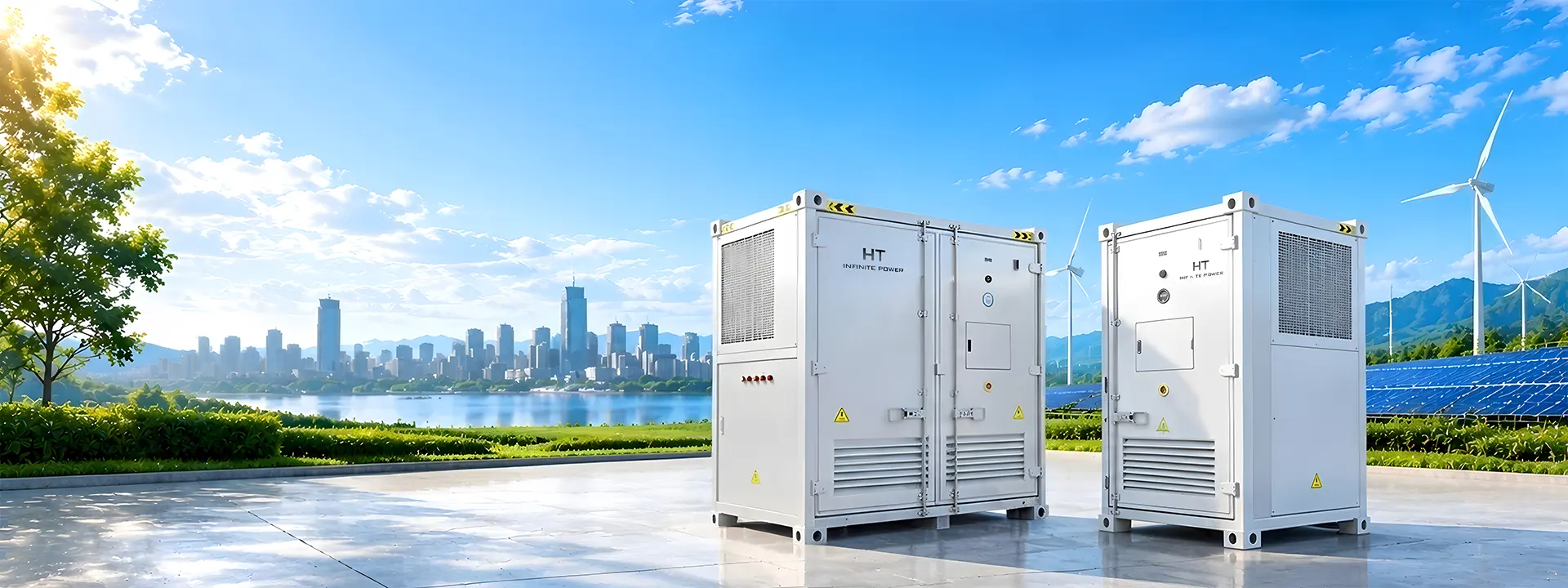

IP55

Anti-Collision & Anti-Theft Containerized Design

Visible fill port for direct coolant refill, no machine needed

Online UPS Architecture, 0ms switching

Easy Installation And Maintenance
Features of Energy Storage Container
● All-Weather Guardian & Grid Adaptability: With UPS Architecture, delivers a 0ms switching time to ensure continuous, uninterrupted power supply for scenarios involving harsh power grid fluctuations, short-term power outages, and weak power grids, eliminating any risk of operational downtime, making this energy storage container a dependable grid stabilizer.
● High Integration & Minimalist Setup: Combines batteries, PCS, fire suppression, and cooling systems in one energy storage container. Small footprint drastically reduces on-site installation time and costs, supporting continuous charging while discharging to optimize energy.
● Smart O&M: Refined cloud monitoring enables autonomous anomaly detection and remote OTA/local HMI upgrades for unattended operation of energy storage container.
● Ultimate Safety Protection: Multi-level BMS linkage protection coupled with precision Aerosol fire suppression prevents thermal runaway effectively, ensuring the ultimate safety of the entire energy storage container.
● Toolless Visual Coolant Refill Interface: Features an external, visualized coolant level port allowing operators to check and add the liquid-cooling directly by opening the filler cap—eliminating the need for specialized injection machinery.
● IP55 Protection & Strong Environmental Adaptability: IP55 enclosure, equipped with shockproof, dustproof, and waterproof features, anti-collision and high-security anti-theft locking for energy storage container operates stably in a variety of harsh outdoor environments.
Model :
Rated AC power :
Discharge rate :
Rated AC voltage :
Rated battery capacity :
Rated system voltage :
System Voltage Range :
Battery type :
Cooling method :
Protection level :
Working Temp. Range :
Size(mm) :
Weight :
HT 250kW/500kW-522kWh
125kW/250kW/500kW(optional)
0.5C/1C(optional)
3/N/PE, 400 V
522kWh(Unlimited expansion per customer requirements)
832V
715-923Vdc
Lithium iron phosphate battery 314Ah(LFP)
Liquid Cooling
IP55
-20℃~55℃
2060(W)x1320(D)x2250(H)
5T

Why Choose the HT UPS Energy Storage Solution?
The HT UPS Energy Storage Solution uses a dual-PCS online architecture to provide uninterrupted power for critical loads without relying on STS switching.
0 ms Power Transfer
Unlike traditional STS solutions, which typically require 5–15 ms for source switching, the HT UPS keeps the load-side PCS continuously online. There is no switching action when the grid fails.
Dual-PCS Redundancy
Traditional STS systems rely on a single switching point. The HT UPS uses two PCS units to provide system-level redundancy and reduce single-point-of-failure risk.
True Online Double Conversion
Instead of relying on source switching to respond to grid disturbances, the HT UPS uses online double conversion to isolate critical loads and maintain stable output voltage and frequency.
Support for Demanding Loads
The PCS supports three-phase unbalanced and non-linear loads, making the solution suitable for data centers, precision manufacturing, healthcare, and other critical applications.
522 kWh Extended Backup
While conventional UPS configurations often provide minute-level backup, the integrated 522 kWh battery enables extended, hour-level power support during prolonged grid outages.
Traditional STS vs. HT UPS
Traditional STS solutions depend on switching between power sources, which can introduce a brief interruption and expose critical loads to switching disturbances. The HT UPS eliminates this switching process through its continuously online dual-PCS architecture.
Traditional STS solutions also have a critical dependency on the switching device itself. With dual PCS redundancy, the HT UPS reduces this single-point-of-failure risk while providing integrated power conversion and extended battery backup.
Typical Applications
Data Centers · Semiconductor Manufacturing · Healthcare · Industrial Control Systems · Critical Commercial Loads · Weak-Grid Sites
Energy Storage Container
Scalability and Customization
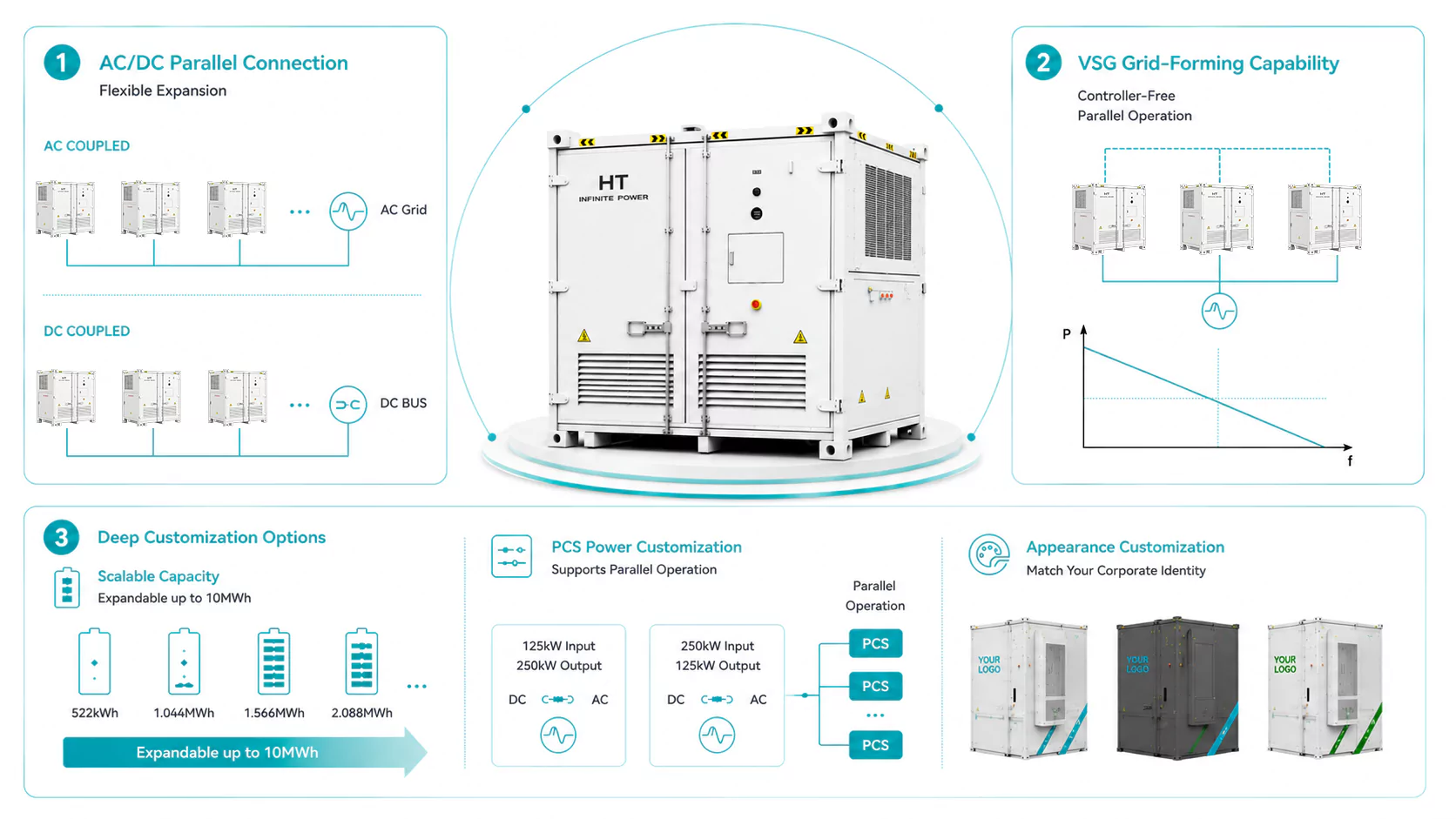
❶ AC/DC Parallel Connection for Different System Applications
Multiple energy storage containers can be directly AC/DC-coupled, enabling flexible capacity expansion to meet various project needs
❷ Powerful VSG Grid-Forming Capability
Supports virtual synchronous parallel operation of multiple Energy Storage Containers without the need for an upper-level controller. Power is automatically distributed among units according to the droop curve.
❸ Deep Customization Options
Battery Capacity Customization: Multiple capacity options available — 522kWh / 1.044MWh / 1.566MWh / 2.088MWh etc, supporting grid-connected expansion up to 10MWh
PCS Power Customization: Configurable as 125kW input with 250kW output, or 250kW input with 125kW output. Also supports parallel operation of multiple PCS units.
Appearance Customization: The Energy Storage Container enclosure painting and logo can be customized according to corporate VI.

Energy Storage Container Structure Diagram
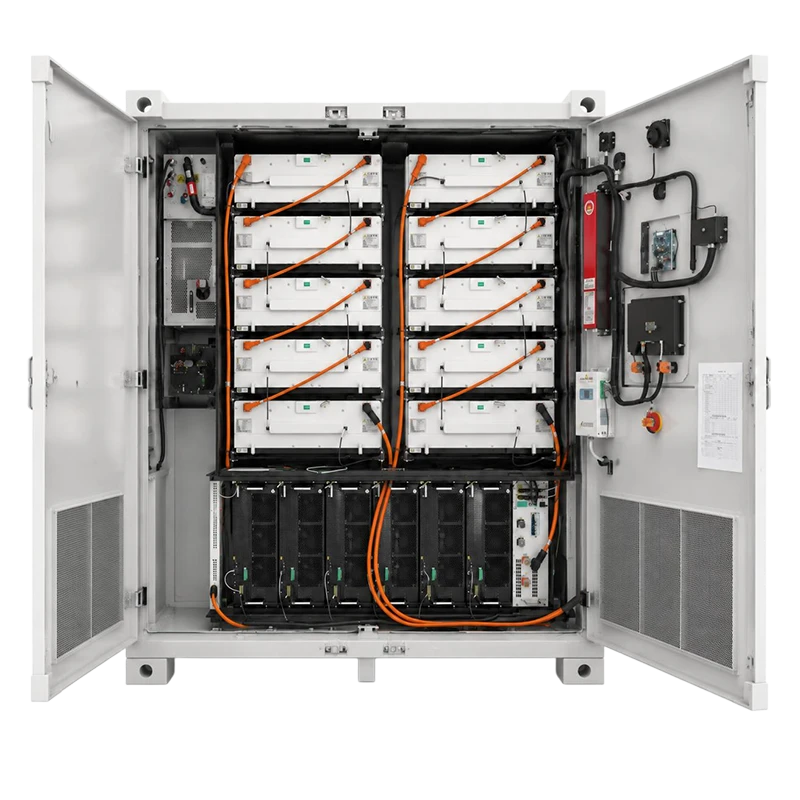
250/500kW–522kWh Energy Storage Container
(250kW charging power and 500kW discharging power)
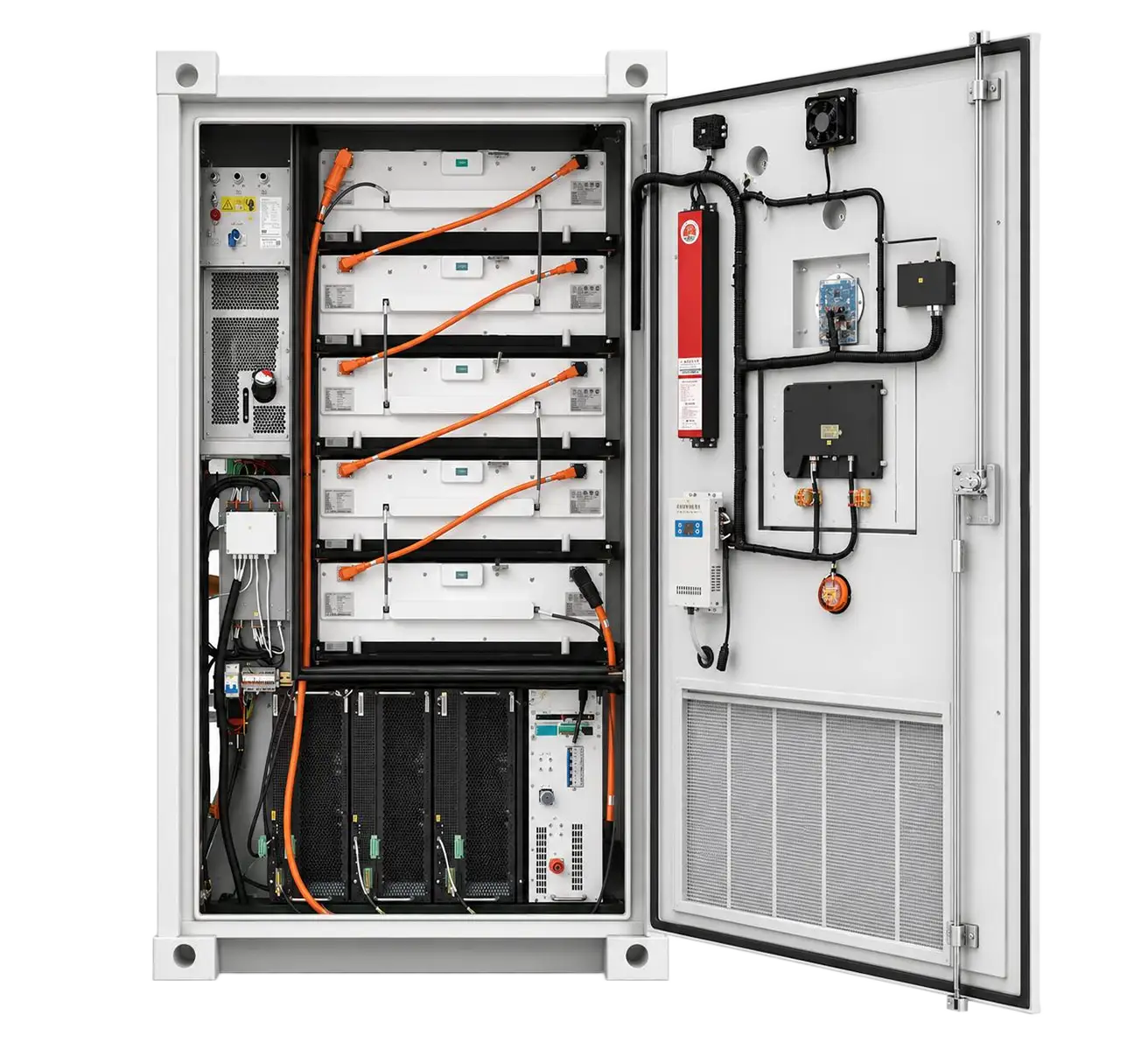
125/250kW–261kWh Energy Storage Cabinet
(125kW charging power and 250kW discharging power)
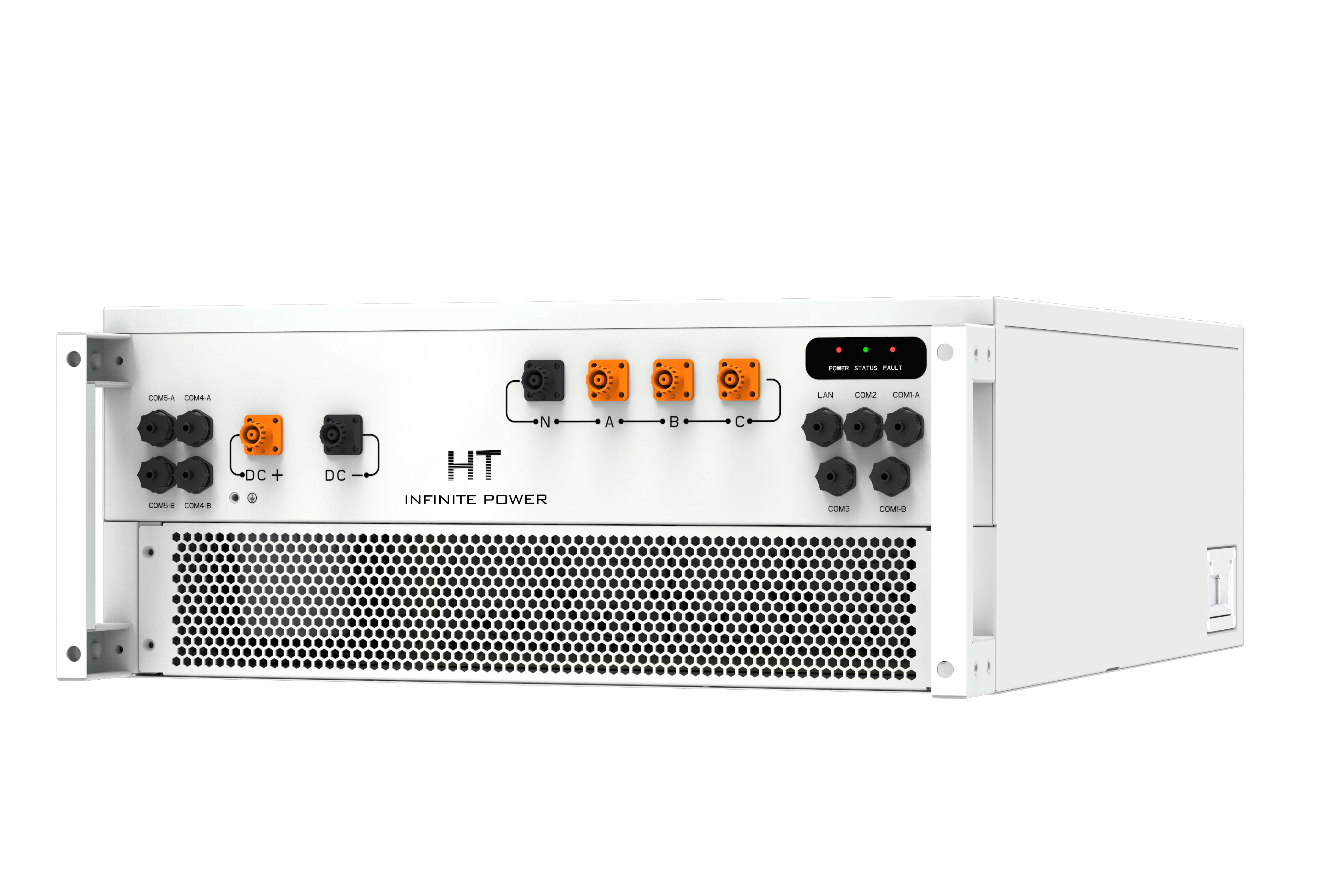
Flexible combined PCS
●Input/Output Characteristics: Supports 125kW wide-voltage input with 250kW instantaneous/peak output capability.It can also support an input power of 250kW and an output power of 125kW.
●Core Function: Enables AC/DC flexible parallel operation, supporting seamless parallel connection of multiple Energy Storage Containers to easily scale up to megawatt-level systems.
●VSG Mode: Built-in virtual synchronous generator algorithm provides inertial support for microgrids and enhances the stability of parallel-connected containers.
●UPS Mode:Designed with true UPS architecture for 0ms seamless transfer, this product is ideal for precision industry, data centers, medical devices, and critical infrastructure — applications where no power interruption risk is acceptable.
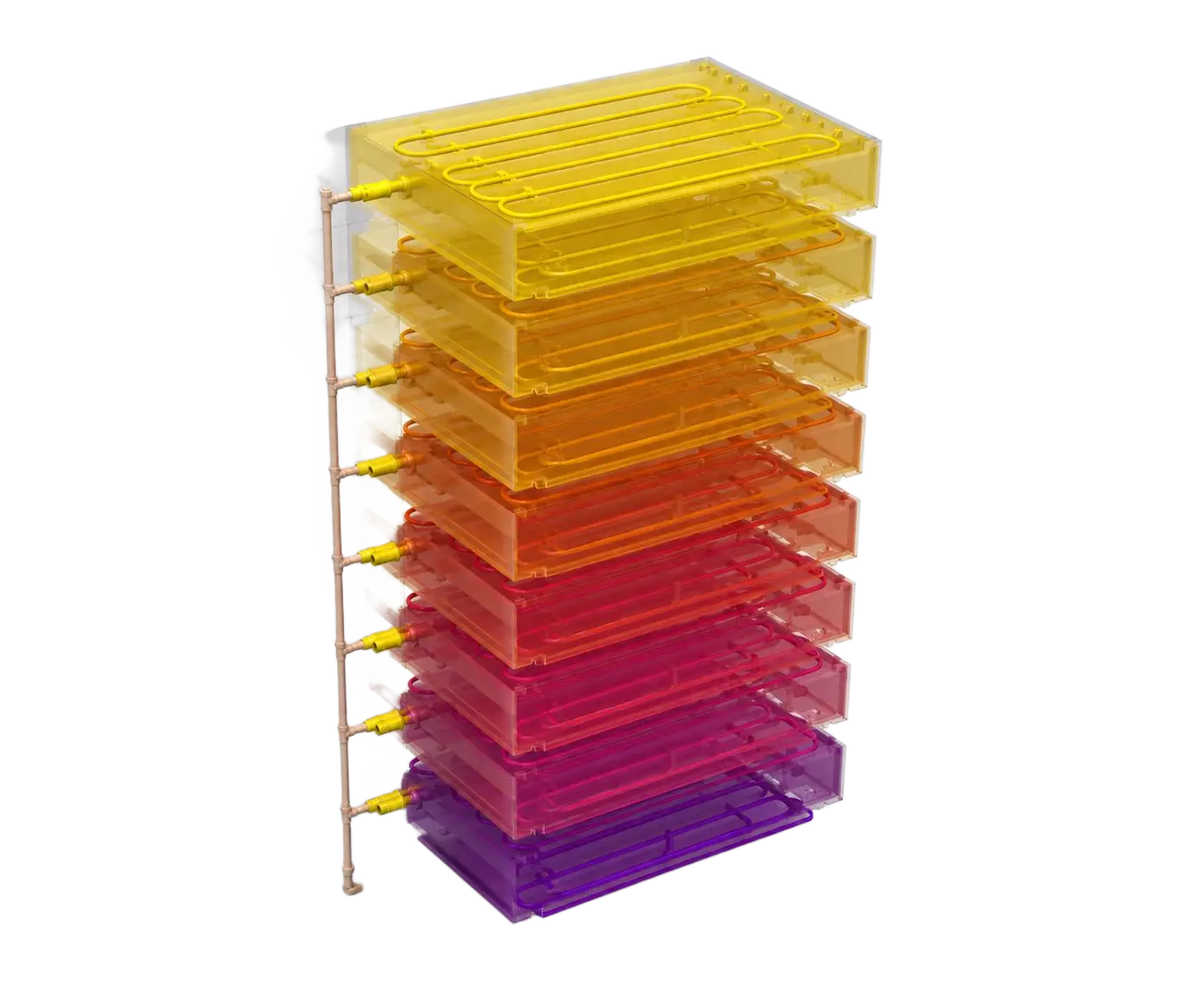
522kWh Liquid-Cooled Battery System
●High-Density Design: Deploys 314Ah cells within a compact Energy Storage Container to achieve 522kWh high capacity.
●Liquid Cooling Thermal Management: Full-time active liquid cooling maintains cell temperature difference within ≤2°C, ensuring that the Energy Storage Container extends cycle life by 20% even in high-temperature environments.
●Innovative Liquid Filling Mode: Featuring a visualized filling system, the energy storage container allows for manual liquid filling without the need for a dedicated filling machine.
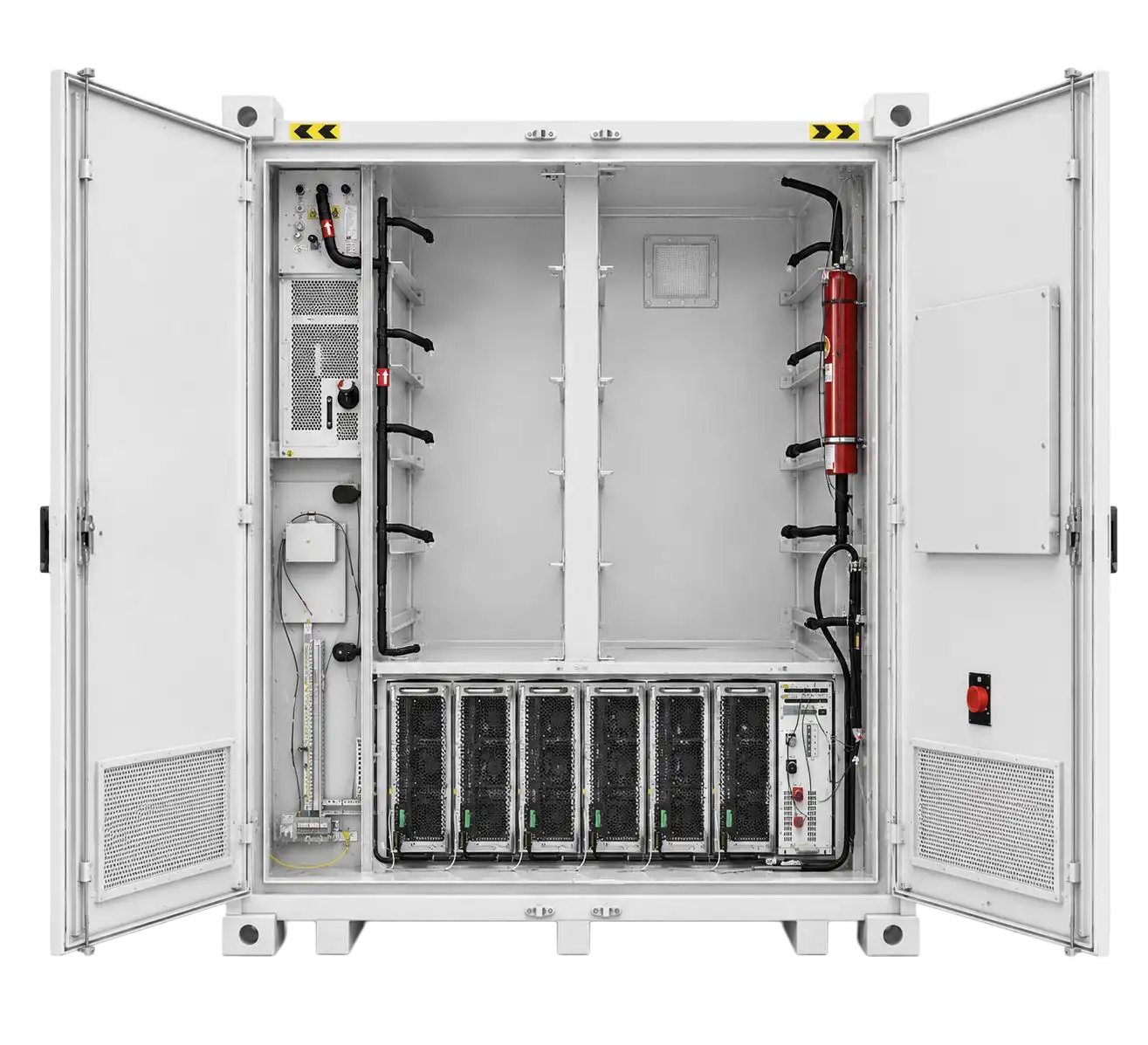
Compact Container Structure
●Compactness: Standard Energy Storage Container size with a footprint of less than 6.5m² — ready for immediate deployment upon delivery.
●AC/DC Integrated: Pre-installed AC grid connection cabinet and DC combiner box inside the container, requiring no complex on-site wiring — truly plug-and-play.
●Anti-theft and impact-resistant: The container design eliminates concerns about impact and theft risks, allowing for worry-free transportation and outdoor installation.
Energy Storage Container And
Energy Storage Cabinet Application Scenario
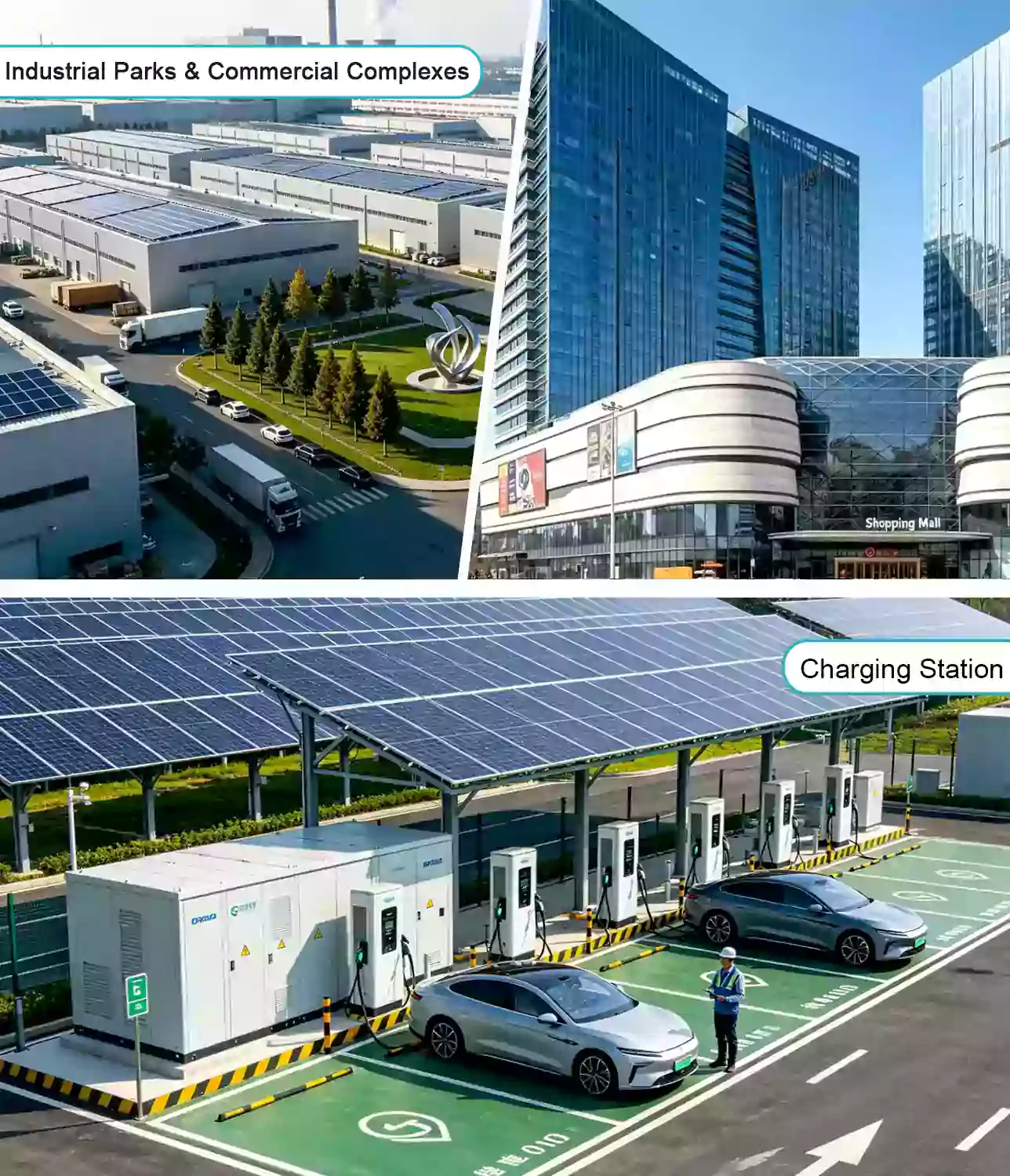
Industrial Parks & Commercial Complexes
● Pain Point: High capacity charge and large peak-valley electricity price difference
● Solution: Deploy one Energy Storage Container — 125kW charging during off-peak hours, 250kW discharging during peak hours. Utilize VSG mode to smooth PV fluctuations.
PV-Storage-Charging Integrated Stations
● Pain Point: Instantaneous impact of fast chargers on the grid, transformer overload.
● Solution: Use the Energy Storage Container as a DC bus buffer. The 250kW output capability can directly supply power to ultra-fast chargers.
● Advantage: VSG mode supports grid voltage sag ride-through and solves the "charging interruption" issue.
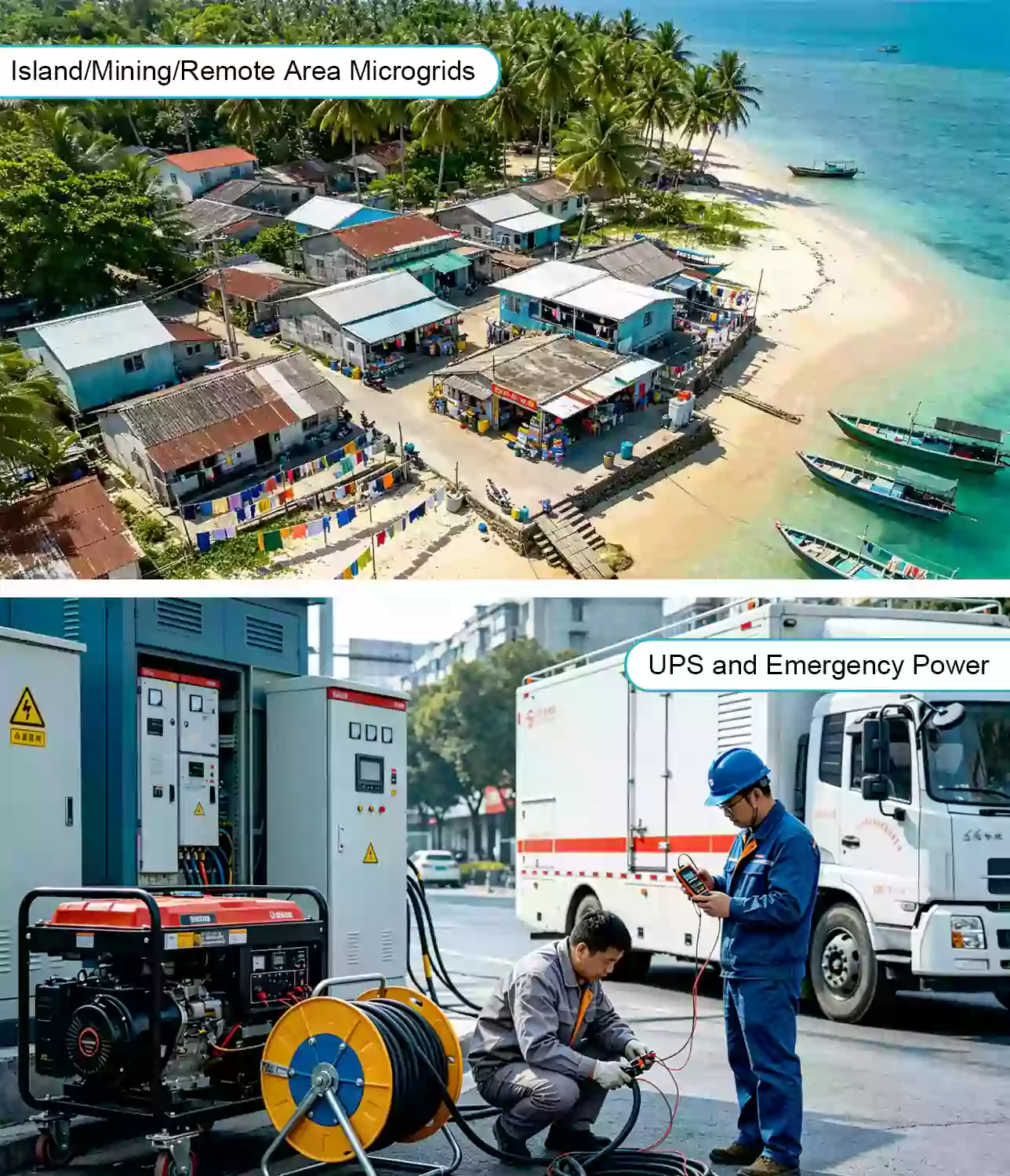
Island/Mining/Remote Area Microgrids
● Pain Point: High noise and expensive fuel of diesel generators
● Solution: Multiple Energy Storage Containers build an independent microgrid through AC/DC parallel connection.
UPS and Emergency Power
● Solution: The energy storage container adopts the UPS design philosophy, making it very friendly for 24/7 uninterruptible power applications such as banks, precision industry, AI systems, hospitals, data centers, and other mission-critical scenarios where power interruption is not tolerated.
Factory & Certifications
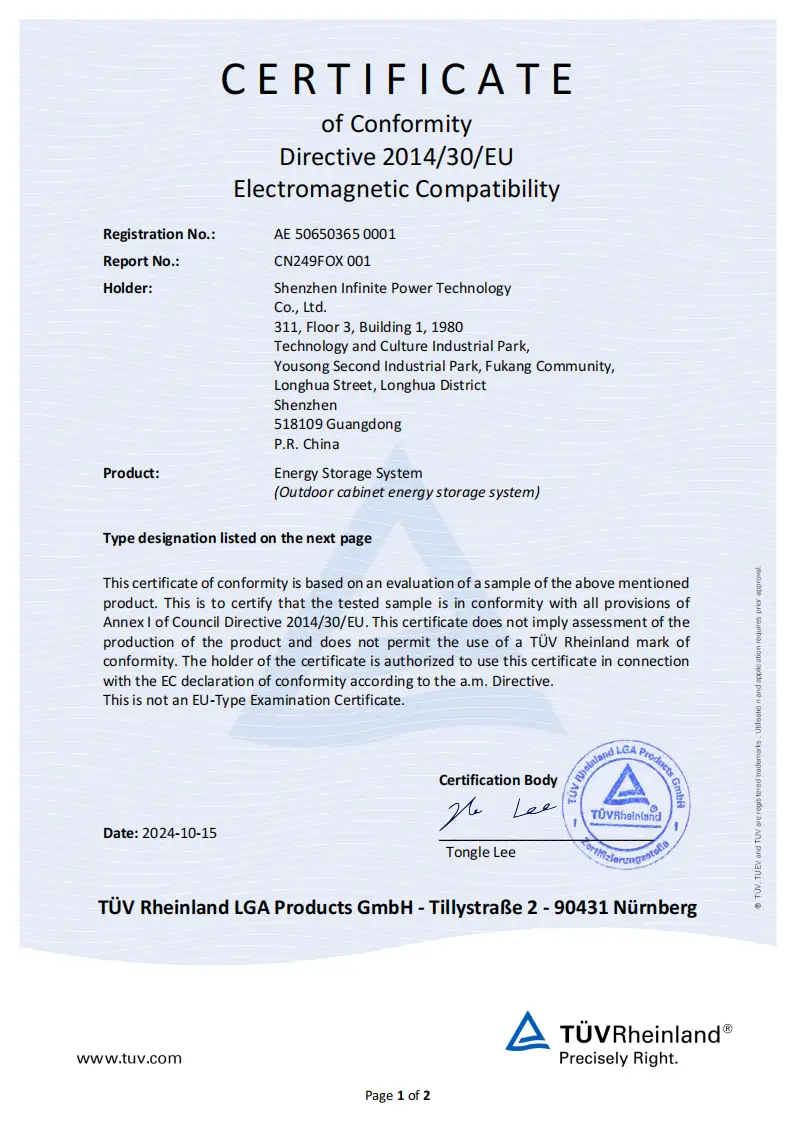
Energy Storage System-EMC
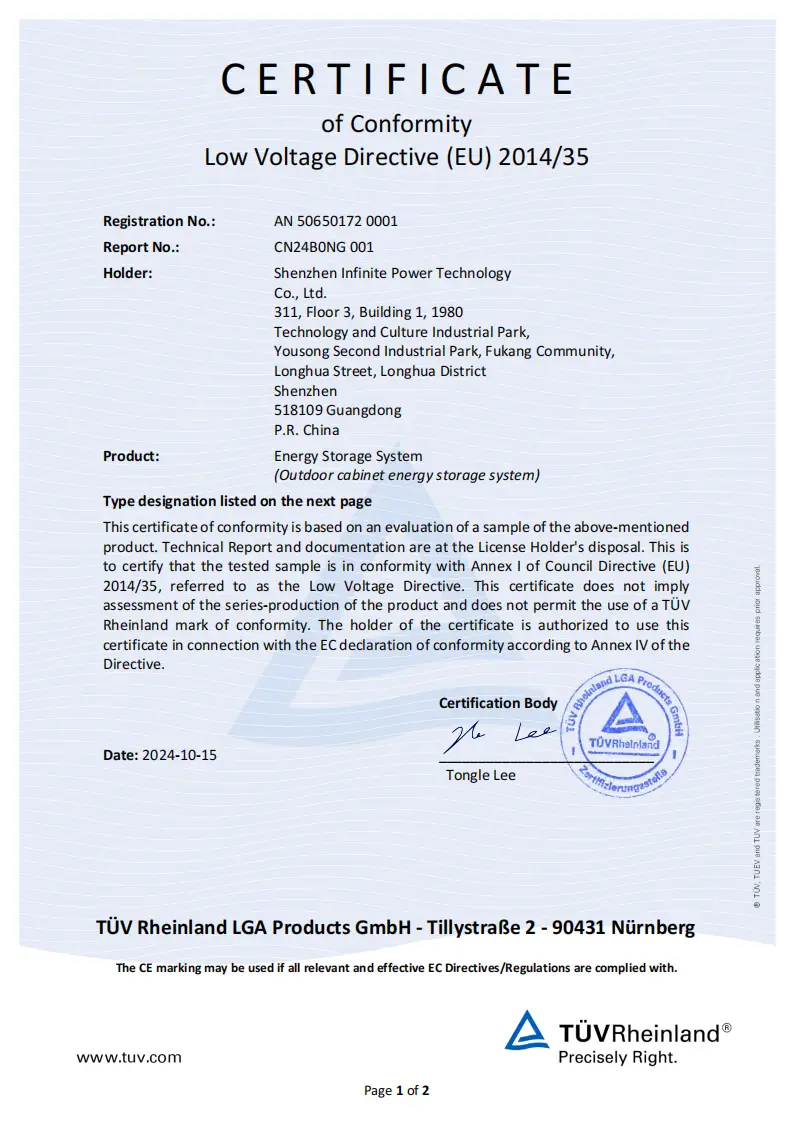
Energy Storage System-LVD
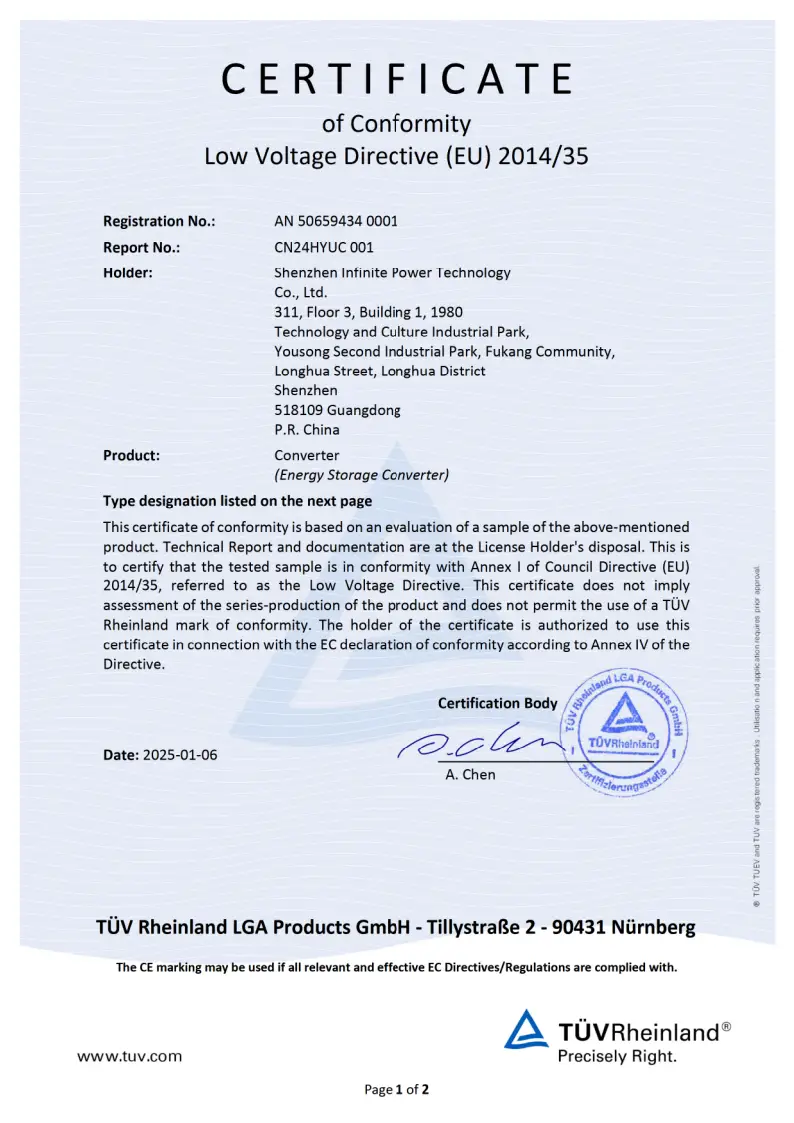
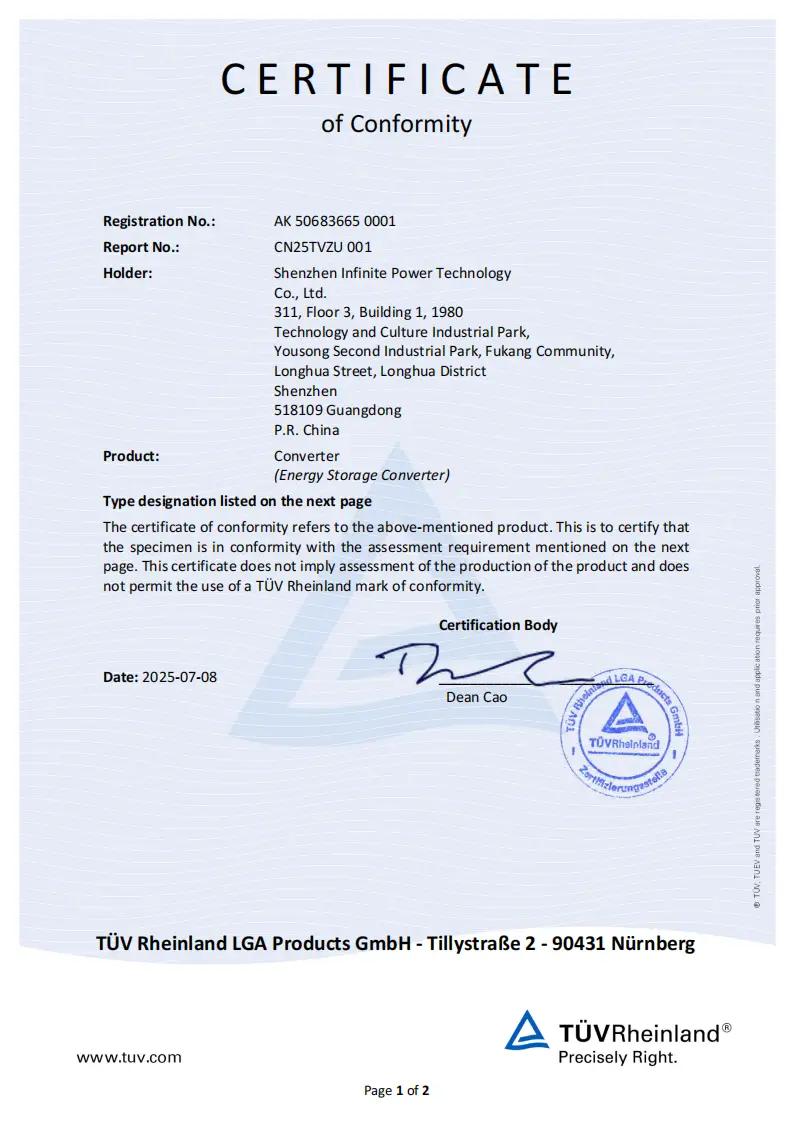
Energy Storage Converter-LVD
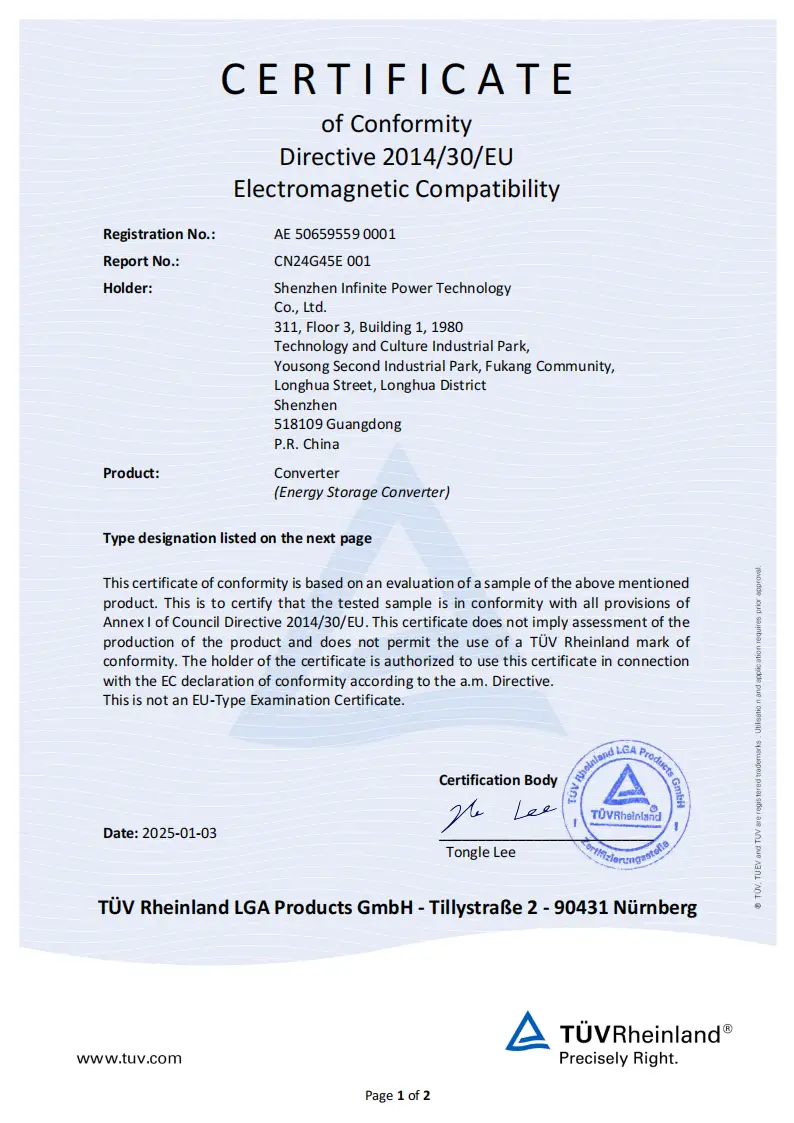
Energy Storage Converter-EMC
EN 50549-1:2019+A1
EN 50549-10:2022
How To Get A Suitable BESS Project ?

Collect Projets Information

Contact Us

Our Engineers Make Solutions And Quotation For You

Install

Use
FREQUENTLY ASKED QUESTIONS
Under the standard configuration, the Energy Storage Container occupies less than 6.5m² — roughly the size of a standard parking space. Installation only requires a hardened, level concrete ground surface; no dedicated equipment room is needed. Upon delivery, the unit is craned into place, connected to the AC input cable and grounding, and it is ready to use.
Charging: At the rated input of 125kW, it takes approximately 4.2 hours to fully charge .
Discharging: At the peak output of 250kW, it takes approximately 2.1 hours to fully discharge.
The system supports customizable charge/discharge management based on time, power level, or strategy, and can also operate automatically according to peak/off-peak electricity tariff periods.
A liquid cooling system maintains the temperature difference between cells within ≤2°C, whereas air cooling typically results in a difference of 5–8°C. A smaller temperature difference means:
Better cell consistency and slower degradation
Approximately 20% longer cycle life
Stable full-power operation even in high-temperature environments
Lower system noise (no high-power fans)
VSG (Virtual Synchronous Generator) allows the energy storage equipment to actively support the grid just like a conventional generator:
Grid-connected mode: Automatically participates in frequency/voltage regulation, reducing impact on the grid.
Off-grid mode: Multiple units can automatically form a grid and independently operate loads.
Practical benefits: Prevents frequent disconnection in weak grid areas, and avoids "charging interruptions" at PV-storage-charging stations.
Maintenance is very simple:
Liquid cooling system: Check the coolant level every 6–12 months.
Electrical connections: Tighten power cables once per year.
Software updates: Completed remotely via OTA.
For More Questions Please Contact Us

+86 18722386248


Building 1, 1980 technology and Culture Industrial Park , Longhua, Shenzhen ,China